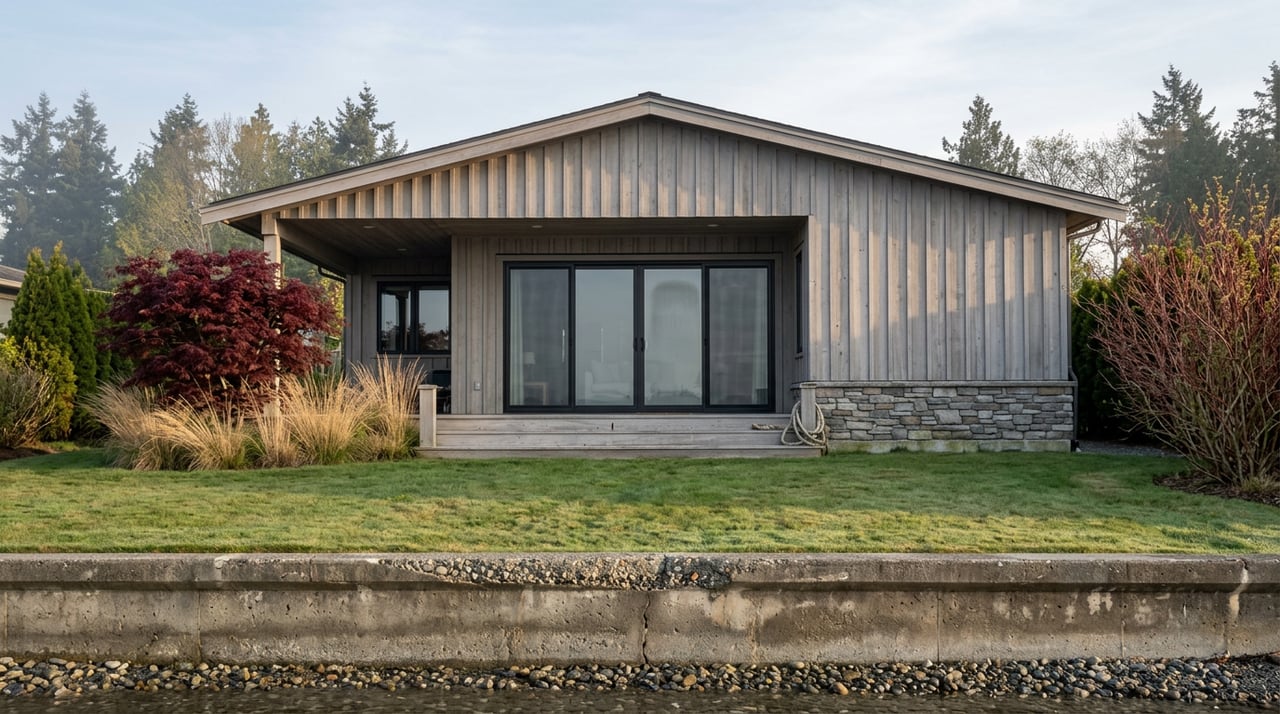
Waterfront Prices Are Up in Blaine and Birch Bay. So Why Are Homes Taking Longer to Sell?
August 13, 2026
August 13, 2026
A shoreline home in Semiahmoo sold this year for roughly 7 percent more than the same type of property brought a year earlier, based on the trailing 12-month median. That is the kind of number that should come with a fast close. Instead, homes in that stretch are sitting on the market for an average of 87 days, well past the 54-day national average. Meanwhile the rest of Whatcom County is doing the opposite: prices have softened, yet homes are moving in roughly seven weeks.
That is backward from what most sellers expect. A hot pocket of the market should sell faster, not slower. The gap is not about buyer hesitation or a house that's overpriced. It comes down to the specific paperwork this stretch of coastline requires before a sale can close, paperwork that a typical inland Whatcom County transaction never touches.
Here is the contrast worth sitting with. Whatcom County overall, tracked over the three months ending April 2026, posted a median sale price near $609,000, down about 2.7 percent from the same period a year earlier. Waterfront property along Semiahmoo Bay moved the opposite direction, with a 12-month median of $821,000, up 7 percent. Broader Blaine-Birch Bay listings sat between those two stories, with a median list price around $687,000 and a typical 53 days on market as of mid-2026.
| Segment | Median price | Trend | Typical days on market |
|---|---|---|---|
| Whatcom County overall (3 months ending April 2026) | ~$609,000 | Down ~2.7% year over year | ~49 days |
| Blaine-Birch Bay, all listings | ~$687,000 | Mixed, price growth concentrated in waterfront | ~53 days |
| Semiahmoo Bay waterfront (trailing 12 months) | $821,000 | Up 7% year over year | 87 days |
If waterfront demand were the whole story, Semiahmoo would be the fastest-moving segment on this list, not the slowest. The extra month on market is friction, and friction has a specific address: septic status, shoreline permit history, and flood zone paperwork.
Whatcom County requires that a current inspection report, called a Report of System Status, be on file with Whatcom County Health and Community Services any time a septic-served property is offered for sale. Conventional gravity systems need a fresh evaluation every three years, and some system types need it more often. A licensed Operations and Maintenance specialist typically performs the check, and the completed report gets filed with the county along with a modest fee.
For an inland home on public sewer, none of this applies. For a waterfront property in Birch Bay, Semiahmoo, or the unincorporated stretches around them, it is a required step before closing, not an optional inspection a buyer might waive. If the seller's last evaluation has lapsed, that filing has to happen before the transaction can close cleanly, and scheduling a licensed specialist during peak season is not instant. A septic inspection firm serving the county notes the filing itself carries a separate fee on top of the inspection cost, another small step that adds days when it is discovered late rather than handled before listing.
Many waterfront lots in this corridor carry an existing bulkhead, retaining wall, or beach stairway, often built decades before anyone thought to ask about permits. Washington's Shoreline Management Act sets a specific dollar threshold for what counts as a project requiring a shoreline permit: any development whose fair market value exceeds $8,504 currently triggers that requirement, according to the Washington State Department of Ecology. A normal protective bulkhead for a single-family home has historically carried narrow exemptions, but exemptions are not automatic, and new bulkhead construction is rarely approved unless active erosion is already threatening the structure, according to Shore Friendly, a Puget Sound shoreline resource partnership.
That matters at the negotiating table in a specific way. A buyer's lender, insurer, or inspector may ask whether an existing bulkhead was ever permitted. If the paperwork does not exist, the answer is often that nobody knows, because it was built before anyone tracked it that closely. Resolving that question after an offer is already in hand adds real time to escrow. Resolving it before listing does not.
Whatcom County participates in FEMA's Community Rating System, which currently gives residents in unincorporated parts of the county a 20 percent reduction on flood insurance premiums, per the county's own flood program page. Cities and the Lummi Nation administer their own separate flood programs. That means two comparable homes a few blocks apart, one inside Blaine's city limits and one in unincorporated Birch Bay, can carry different flood insurance costs for reasons that have nothing to do with the house itself and everything to do with which jurisdiction issued the permit.
Buyers comparing listings across that boundary are often comparing insurance math without realizing it. Sellers who can point to their parcel's specific jurisdiction and the applicable flood program save a buyer a phone call, and a phone call during an already tight closing window is exactly the kind of delay that stacks up.
None of this paperwork is a reason to avoid selling waterfront property here. It is a reason to do the paperwork before the sign goes in the yard rather than after an offer arrives. A short list, in the order it tends to matter:
Handled ahead of listing, these steps do not erase the extra weeks entirely, since some of them involve county scheduling that is out of anyone's control. But they move that time earlier in the process, before a buyer is under contract and watching the calendar, rather than in the middle of it.
How long is a Report of System Status good for? It depends on system type. Conventional gravity systems are on a three-year cycle. Other system types can require more frequent evaluation, so the safest move is to confirm the specific requirement for your system with the county before listing.
Does the flood insurance discount apply everywhere in Blaine and Birch Bay? No. The 20 percent Community Rating System discount applies to unincorporated parts of Whatcom County. Properties inside Blaine's city limits fall under the city's own flood program, which may carry different terms.
What if my bulkhead was built before anyone tracked shoreline permits? That is common along this stretch of coast. It does not mean a permit was never required, only that the paper trail may not exist. Confirming what can be documented now, before a buyer's inspector raises the question, is worth the time.
If you are weighing a sale in Blaine, Birch Bay, or Semiahmoo and want a clear read on what your specific parcel's paperwork actually looks like before you list, Christine Rasmussen has spent years working this exact stretch of coastline. Let's Connect and walk through what your timeline realistically looks like.
Stay up to date on the latest real estate trends.
Benefit from expert negotiation, local market knowledge, and personalized service focused on achieving your real estate goals.