Ferndale's Median Price Keeps Climbing. Forty-Four Houses Are About to Stop Playing That Game.
September 17, 2026
September 17, 2026
Ferndale's housing market has been telling two different stories this year, and neither one is wrong. A market report tied to April 2026 closings put the city's median sale price at $665,000, with homes selling in an average of 37 days and just over two months of inventory on the shelf. That is a tight, competitive market by any measure, the kind where a well-priced three-bedroom does not sit long enough to gather dust.
Neither number captures what is happening quietly on an 8.2-acre parcel off Thornton Street in northeast Ferndale, where a nonprofit land trust is preparing to build homes that will never trade at whatever the market decides they're worth. Once they sell, they're capped. Permanently. That distinction is worth understanding whether or not you ever qualify to buy one, because it explains something the median price alone cannot: why Ferndale, specifically, became the site of one of Whatcom County's biggest bets on decoupling a home's price from its neighborhood's market.
Kulshan Community Land Trust, the Bellingham-based nonprofit behind the project, has been blunt about why Ferndale needed this. Home prices in the city have more than doubled over the past eight years, now averaging above $650,000. Over roughly the same stretch, rental costs have climbed almost 50 percent while wages have not kept pace, and the nonprofit estimates fewer than one in five Ferndale households can afford a home at the median price today. Whatcom County's median household income, based on 2020 through 2024 Census data, sits around $81,784. Run that income through a conventional mortgage on a $665,000 home and the gap explains itself without needing a chart.
This is not a story unique to Ferndale. But it is why the city, the county, and a nonprofit land trust ended up co-funding a housing project instead of leaving the math to the open market alone.
The project, still known by the working name Thornton Village, sits on land Whatcom County purchased using American Rescue Plan Act funds, more than $1.2 million of it, specifically to preserve the site for long-term affordability. Kulshan acquired the parcel in a partnership with the county and the City of Ferndale, and this year the state added another $8 million in capital budget funding to cover infrastructure and site readiness.
The home count has moved as the project has gone through design. Early reporting in 2022 described a vision for 50 or more homes. A city council briefing in August 2025 put the plan at 44 permanently affordable homes, prioritized for Ferndale residents and workforce housing, with a mix of unit types intended to support aging in place. A news report this past May described it as a 46-home community. Kulshan's own project page currently describes it as a neighborhood of up to 50 homes, still in pre-development. None of these numbers are wrong exactly. They are snapshots of a project that is still being drawn.
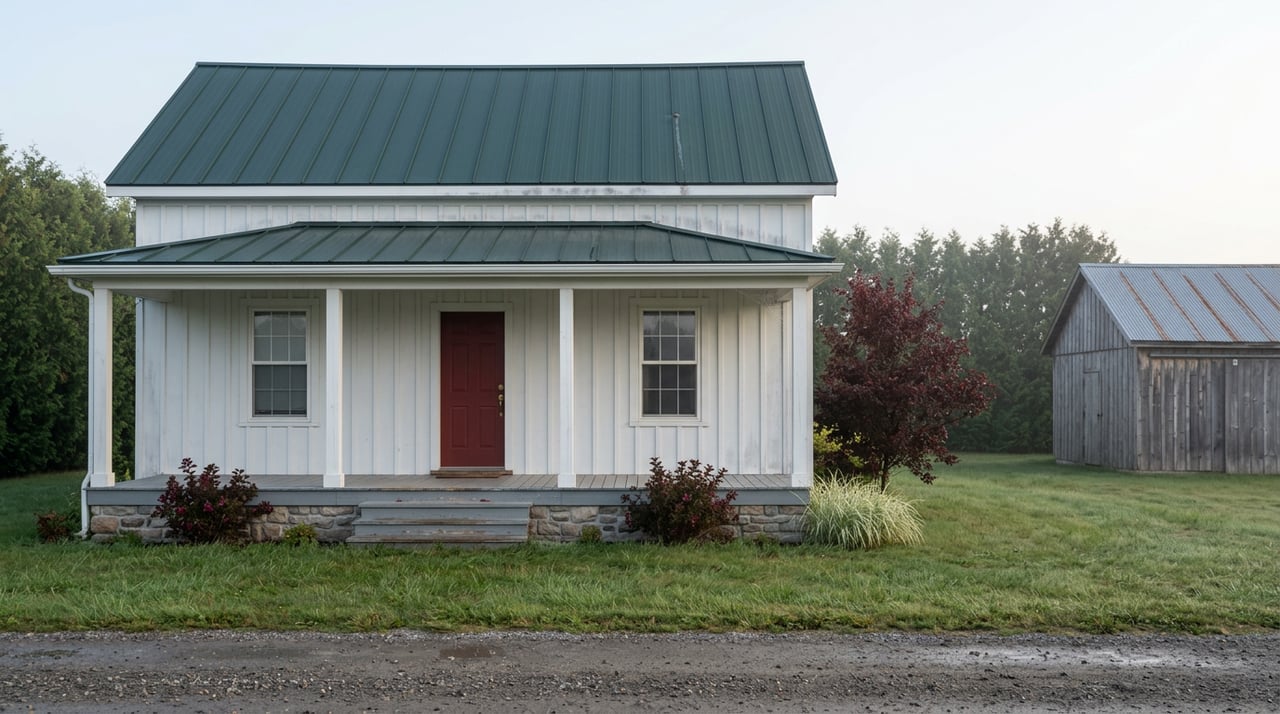
What has stayed consistent is the shape of it: duplexes, cottages, and townhomes arranged around shared courtyards and pedestrian paths, near schools, services, and transit, on a site that also includes a small barn Kulshan has talked about preserving as a community gathering space.
"Affordable Housing is one of the most pressing issues in the City of Ferndale and I am excited and grateful to see this project moving forward," Mayor Hansen said of the partnership. "This is exactly the sort of collaboration we need if we are going to ensure that Ferndale remains a community for all, not just all who can afford it."
Here is the mechanism that separates a Kulshan home from anything else on the Ferndale market. The land trust keeps ownership of the land itself, leasing it to the homeowner on a 99-year renewable ground lease. The buyer owns the house outright, builds equity by paying down their mortgage principal like any other homeowner, and can sell whenever they choose. What they cannot do is sell at market price. The resale formula caps the home's value growth at 1.5 percent per year, a rate set at Kulshan's founding in 1999 and unchanged since.
To see what that actually does over time, look at how Kulshan's own formula plays out on a hypothetical $200,000 base price:
| Years owned | Formula price under Kulshan's 1.5% cap |
|---|---|
| 1 year | $203,000 |
| 5 years | $215,456 |
| 10 years | $232,108 |
Compare that to what the open market has done in Whatcom County at points in the recent past. In early 2022, county-wide appreciation was running near 13 percent annually, a rate that would have taken that same $200,000 home well past $350,000 in five years. That comparison is not a forecast. Market appreciation swings year to year and Whatcom County's has cooled since. But it illustrates the actual trade a buyer makes: give up the chance at market-rate windfalls in exchange for a purchase price that stays within reach of the next family in line, plus modest, steady equity that beats renting.
Kulshan's eligibility rules are specific enough to matter if you're weighing whether this path applies to you:
Kulshan's own materials note the average wait for a home once you're in the applicant pool runs about two years, though individual timelines have varied widely depending on turnover and unit availability.
Here is where the record gets genuinely unsettled, and it matters if you're trying to figure out when these units might actually become available. The August 2025 city council briefing noted that because Whatcom County used ARPA funds to purchase the Thornton land, construction had to begin by the end of 2026 to satisfy those funding rules. A news report published this past May described construction as expected to begin in late 2027. Kulshan's own project page, as it currently reads, says the same thing: construction anticipated in 2027.
Those two dates are not the same year, and nothing in the public record explains how the ARPA-linked 2026 construction deadline gets reconciled with a 2027 start. It is possible the new state capital budget funding changed the compliance picture in ways that were not detailed publicly. It is possible the timeline simply slipped and the ARPA condition is being handled separately. Anyone tracking this project, whether for a personal waitlist application or general curiosity about the neighborhood, should ask Kulshan directly which date currently governs, since the answer determines whether these homes are a 2027 story or a 2028 one.
If you're a first-time buyer priced out of Ferndale's open market, Thornton Village and Kulshan's broader portfolio across Whatcom County are worth exploring even before construction starts, since the application and homebuyer education process typically begins well ahead of move-in. If you already own in Ferndale, this project will not touch your home's resale value. It sits outside the speculative market entirely, by design, and adds housing stock without adding competing inventory to your specific comparable set. And if you're simply trying to make sense of why Ferndale's median keeps climbing while officials talk about affordability in the same breath, this is the answer: the city is not trying to lower the market-rate median. It is building a second track next to it.
Does a permanently affordable project like this pull down home values nearby? Nothing in the public record suggests that. These homes are removed from the open market by the ground lease structure, so they do not appear as comparable sales for market-rate properties near them.
Can I apply if I don't currently live in Whatcom County? Yes. Kulshan's eligibility rules require that the home become your primary residence, not that you already reside locally when you apply.
What happens if I need to sell before I've built much equity? You sell to an income-qualified buyer from Kulshan's applicant pool, with Kulshan supporting the process. Your sale price follows the formula based on your original base price and years of ownership, not market conditions at the time.
Whether Thornton Village opens in 2027, 2028, or somewhere between the two, it is going to change what "affordable" means on one specific street in Ferndale, and it is worth understanding before the headlines catch up. If you're weighing whether a land trust path, a conventional purchase, or something else entirely fits where you are right now, Christine Rasmussen has spent years walking Whatcom County buyers through exactly these kinds of decisions. Let's Connect.
Stay up to date on the latest real estate trends.
Benefit from expert negotiation, local market knowledge, and personalized service focused on achieving your real estate goals.