Buried Oil Tanks in a Bellingham Home Sale
August 13, 2026
August 13, 2026
On September 4, 2025, a property owner along Lakeway Drive, just outside Bellingham's city limits in unincorporated Whatcom County, filed a permit to decommission a 500-gallon underground heating oil tank. The fee was $220.50. The work closed out three weeks later, on September 25. It's a small, unremarkable line in the county's own permit archive, sitting a few rows above a permit for burying a propane tank at another unincorporated address and a fire suppression review for a commercial project in Ferndale. Inside actual Bellingham city limits, this same kind of work runs through the city's own fire department rather than the county's, but the paperwork trail works the same way: a fill pipe or a vent line turns up during an inspection, someone calls a contractor, and a decades-old piece of heating infrastructure finally gets closed for good.
The tank itself isn't the interesting part. What changed underneath it over the past year is.
Heating oil was the default fuel for home furnaces in this region for most of the first half of the twentieth century, long before natural gas lines reached most residential streets. That means the risk of an unrecorded tank tracks almost exactly with a home's age, and Bellingham's oldest neighborhoods carry that history in their bones.
| Neighborhood | Predominant construction era | Why it matters for tanks |
|---|---|---|
| South Hill | 587 of 644 principal structures built before 1961; 527 before 1946, per the neighborhood's National Register nomination | The majority of homes here predate the region's shift away from oil heat |
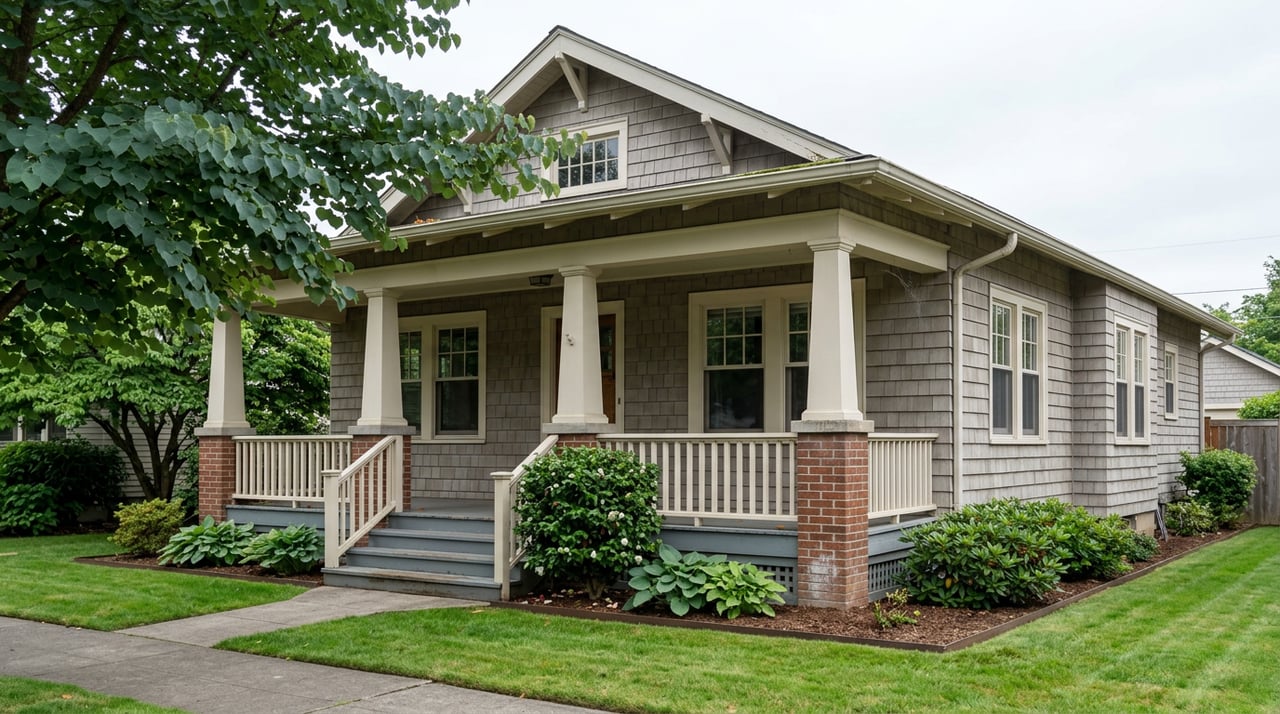
| Sunnyland | Single-family homes largely built 1900 to 1930, mostly Craftsman bungalows | Same era, same fuel source, dense grid of small lots |
| York | Historic district developed around 1900, per the City of Bellingham's historic districts page | One of the city's oldest platted residential areas |
| Sehome Hill | Millworker district built between 1895 and 1930 | Early twentieth century construction throughout |
| Fairhaven | The Fairhaven National Historic District, designated in 1977, includes 17 buildings dated 1888 to 1929 | Bellingham's oldest continuously developed neighborhood |
None of this means every pre-1960s home in these areas has a tank sitting under the lawn. It means the odds aren't zero, and an inspector working a South Hill Foursquare or a Sunnyland bungalow is working with different base rates than one working a 2005 build in Barkley.
Here's the part that catches people off guard during a transaction. There was never a permit requirement to install a residential heating oil tank in this state. Seattle's fire department, for comparison, only holds decommissioning records dated after 1997, because no permit was required to remove or decommission a tank before that either. Whatcom County's Fire Marshal's Office issues permits today for underground fuel tank removal, installation, and repair in the unincorporated county, and Bellingham's own fire department handles the equivalent construction permits inside city limits. Neither office has a historical record of tanks that went into the ground decades ago, only of ones that have been properly closed out under today's process.
A Bellingham-based home inspector, Steven Smith of King of the House Home Inspection, has written about how often the physical evidence is the only clue: a fill cap barely visible in the grass, a breather pipe near the foundation, copper lines running to a furnace room that no longer has an oil burner in it. A seller can answer Washington's disclosure form honestly and still have a tank surface later, because the form only asks what the seller actually knows, not what a professional sweep would find. Washington's standard seller disclosure form asks specifically about underground tanks and contaminated soil, but "unknown" is a legitimate answer, and it doesn't resolve anything for the buyer holding the inspection report two weeks before closing.
Most of the time, this doesn't blow up a deal. It slows one down and shifts a negotiation.
If a sweep confirms a tank and there's no sign of contamination, in-place decommissioning, the process of pumping remaining oil, cleaning the tank, and filling it with an inert material like sand or concrete slurry, typically runs $700 to $1,000 in this part of the state. Full excavation and removal, which lets a contractor inspect the soil underneath directly, tends to run $5,000 to $10,000. Those numbers climb fast once contamination enters the picture: $10,000 to $15,000 for a typical cleanup, and well past $100,000 for the rare case where petroleum has spread into groundwater or a neighboring lot.
Local contractors who do this work, family-run operations like Envirotank in the Bellingham area among them, generally start with a site visit and a written estimate before any excavation begins, and they document the process closely enough that the paperwork can be handed to a lender or title company. That documentation matters more than it used to, because of what changed on the state side in 2025.
For years, Washington ran something close to a quiet backstop for this exact situation. The Pollution Liability Insurance Agency offered a no-cost insurance policy that any heating oil tank owner could register for, covering up to $60,000 in cleanup costs if a registered tank leaked, on the owner's own property or a neighbor's. An incoming buyer could carry that protection forward under the previous system, whether by transfer or by registering the tank themselves shortly after closing. It wasn't loudly advertised, but it functioned as a kind of standing protection sitting underneath older-home transactions across the state.
That policy expired on June 30, 2025, and PLIA stopped accepting new claims under it after July 31, 2025. In its place, PLIA now runs the Heating Oil Loan and Grant Program, which can provide up to $75,000 per applicant, including up to $60,000 specifically for cleanup costs. On paper, the ceiling looks similar. In practice, the mechanism is different in a way that matters. The old program was something you registered for and carried, effectively for free, for as long as you owned the tank. The new one runs on application cycles, not standing enrollment. The 2026 spring cycle opened May 4 and closed June 18, a 45-day window, and acceptance depends on a review process rather than automatic registration. As of this writing, PLIA has not posted a fall 2026 cycle date.
That's the shift worth sitting with if you're buying or selling an older Bellingham home this year. The tanks haven't gotten more common. The regulatory floor underneath them got thinner, and it now requires timing an application window instead of filling out a registration form whenever it's convenient.
If you're selling a home in South Hill, Sunnyland, Columbia, York, Sehome Hill, or Fairhaven and it was built before roughly 1960, it's worth checking for the physical signs before you list rather than after an inspector finds them. A fill cap near the foundation, a narrow vent pipe, or copper lines feeding a furnace room with no oil burner in it are the visible clues. If any of that turns up, scheduling a contractor before listing, rather than during a 10-day inspection contingency, keeps a $700 to $1,000 fix from becoming a negotiation over who pays for a five-figure surprise.
If you're buying, ask your inspector to look specifically for these signs even when the seller's disclosure says "unknown." Visual clues alone can't confirm or rule out a buried tank. Only a metal detector or ground-penetrating radar sweep from a licensed technician can do that. And if a tank is confirmed, don't assume state insurance will simply follow you into ownership the way it might have as recently as last year. Check whether PLIA's grant program has an open window before you count on it as a backstop.
Does Washington law require sellers to disclose a tank they don't know about? No. The state's standard disclosure form only asks sellers to report what they actually know. That's why an honest "unknown" answer doesn't guarantee a clean property, and why a buyer's own inspection carries real weight here.
Can a sale still close if a tank turns up mid-contract? In most cases, yes. If there's no sign of contamination, in-place decommissioning usually fits inside a normal closing timeline and costs closer to four figures than five.
What if the tank turns out to have leaked? That's where both cost and timeline expand, and where PLIA's Heating Oil Loan and Grant Program becomes relevant. Since it now runs on scheduled application cycles rather than automatic coverage, it's worth checking the program's status early rather than assuming it'll be there when you need it.
Older Bellingham homes carry a kind of character you can't build new, from South Hill's bay views to Sunnyland's Craftsman bungalows a few blocks from Trader Joe's. A legacy oil tank isn't a reason to walk away from that character. It's a reason to ask the right questions early, with someone who knows which streets carry this history and how to work through it without losing the timeline or the price you negotiated. If you're buying or selling in one of Bellingham's older neighborhoods and want a second set of eyes on what an inspection report actually means for your closing, Christine Rasmussen is a good place to start. Let's Connect.
Stay up to date on the latest real estate trends.


Benefit from expert negotiation, local market knowledge, and personalized service focused on achieving your real estate goals.