Skagit County's Farmland Rules Just Changed Twice, and Not in the Same Direction
August 20, 2026
August 20, 2026
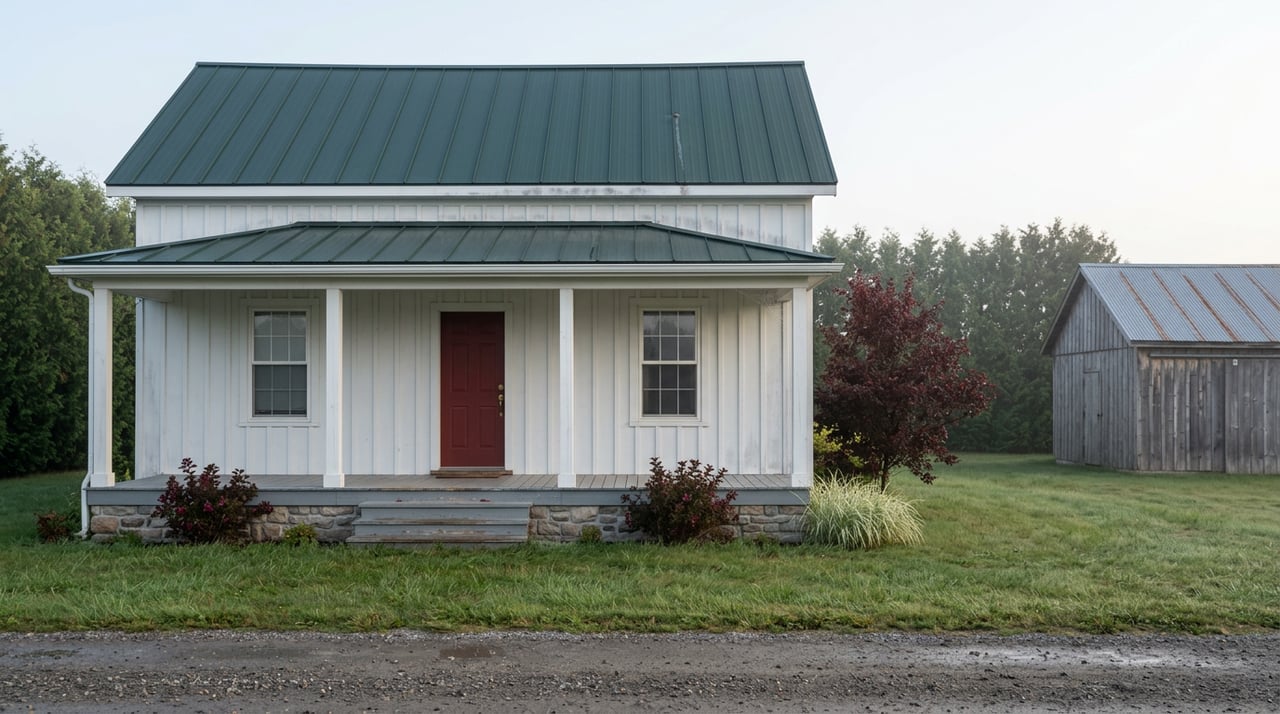
A buyer touring a nine-acre parcel outside Sedro-Woolley this fall might find a converted barn already booked for weddings through next June, a chamomile field, and a listing that reads like a turnkey agritourism business. What that buyer probably will not find, unless someone tells them, is that the right to hold those weddings on that particular property was frozen by the county for more than two years and only became a settled, permanent rule on April 28, 2026. The barn's calendar is real. Whether it transfers cleanly to a new owner is a separate question, and it is one almost nobody asks before making an offer.
That is the shape of buying acreage in Skagit County right now. Two different rulebooks that govern the same land moved within the same year, and they moved in opposite directions. One made it easier to keep farmland classified as farmland while quietly planning to change its use later. The other made it harder to assume that whatever a farm is doing today, it will still be allowed to do tomorrow. A buyer who only checks the price per acre is missing the part of the transaction that actually determines what the land can be used for.
Skagit County Ag-NRL land, the zoning designation covering the county's working farmland, has been under a moratorium on new agritourism permits since January 2024. No new event venues, no new wedding barns, no new commercial ventures layered onto farm ground, while the county worked out permanent rules. The moratorium got renewed roughly every six months for over two years while a Planning Commission, a Community Advisory Group, and the county's Agricultural Advisory Board argued over where the line sits between a working farm hosting the occasional event and a farm that has effectively become an event center with a soybean backdrop.
That argument had real names attached to it. Brock and Katie Clements, who own Saltbox Barn on Fir Island, and Jessie and Jeff Anderson of Maplehurst Farm southwest of Mount Vernon, were among the venue owners who said the proposed restrictions threatened their livelihoods, according to reporting in the Skagit Valley Herald. They formed an advocacy group called Save Skagit Farm Venues. Terry Gifford, who runs Willowbrook Manor English Tea House and Farm Stay on Minkler Road east of Sedro-Woolley, built her chamomile farm and tea business over the same years the county was debating what businesses like hers would be allowed to do going forward.
On April 28, 2026, the Board of County Commissioners voted unanimously to approve permanent agritourism code amendments, closing out what Commissioner Joe Burns called four years of research and revision, adding that the result is "about as good as it can be before implementation," according to goskagit.com. The same vote repealed the moratorium ordinance itself. The freeze is over. What replaced it is more specific, and more tiered, than what came before.
The adopted code sorts agritourism into three levels based on how many people show up and how often:
| Level | Guests per day | Days per year | Permit required |
|---|---|---|---|
| Agritourism 1 | Up to 50 | 10 | None, but operator signs a compliance agreement |
| Agritourism 2 | Higher caps | More days | Administrative special use permit (roughly $3,000, per county planning director Jack Moore) |
| Agritourism 3 | No fixed cap | No fixed cap | Hearing examiner special use permit, longer process, higher fee |
The code also settled a fairness fight that had been running for months. An earlier draft would have let events tied to the Skagit Valley Tulip Festival window run for up to 30 extra days beyond what other agritourism operators got. Planning commissioners recommended stripping that carveout before the final vote, according to Cascadia Daily News, so the days-per-year limits now apply more evenly across operators rather than treating flower-season timing as a separate category.
None of this tells a buyer what happens to a venue that is already operating when ownership changes hands.
The adopted code says existing agritourism operations that have entered into a Voluntary Compliance Agreement or hold a Special Use Permit may continue operating "unless the operation changes or expands." That single clause is where a buyer's assumptions and the county's actual rule can quietly diverge. A change of ownership is not explicitly addressed in that language one way or the other, and a reasonable person could read a sale, a rebrand, or a shift in who is running day-to-day bookings as exactly the kind of change the clause is watching for.
This is not a hypothetical for Skagit County specifically. Testimony at a 2023 county hearing identified 21 wedding or event venues operating on Ag-NRL land, with per-event pricing running above $12,000 at the higher end, according to goskagit.com. That is a meaningful cluster of businesses where the value of the operation, not just the value of the dirt, is baked into the asking price. A buyer evaluating one of those properties has one job before writing an offer that a generic farmland comp sheet will never do for them: call Skagit County Planning and Development Services and ask directly whether the specific compliance agreement or permit attached to that parcel survives a change of ownership, or whether it has to be re-established under the new owner's name.
While the county was tightening use rules, the state was loosening the tax consequence of walking away from farm classification altogether. Washington's current-use taxation program under RCW Chapter 84.34 lets land owners get taxed on farmland's agricultural value rather than its market value, in exchange for keeping it in that use. Pull the land out of that classification and the county bills you retroactively for the difference, plus interest, plus a penalty.
Until recently, that retroactive bill reached back seven years for all current-use categories, including farm and agricultural land. As of removals that happen on or after September 1, 2025, the lookback for farm and agricultural land specifically dropped to four years, per the statute text at app.leg.wa.gov. Open space and timberland classifications still carry the old seven-year exposure. Only the farm and agricultural category got shortened.
That is a real, dollar-relevant shift for anyone buying current-use farmland in Skagit County with an eventual homesite or conversion in mind. Three fewer years of back-tax exposure changes the math on what a parcel actually costs to convert. It does not, however, remove the requirement to notify the county assessor when the use changes, and it does not touch the 20% penalty that still applies on top of the recalculated tax. A shorter lookback is a real discount. It is not the same as no cost.
One document does not move with either of those changes. Skagit County Code requires a Right-to-Manage Natural Resource Lands Disclosure to be recorded with the deed on qualifying property transfers, telling buyers they are near farmland, forestland, or mineral resource lands and should expect the normal noise, dust, and operational rhythm that comes with working agriculture nearby, according to the county's own instructions. This sits alongside, not in place of, Washington's statewide right-to-farm disclosure under RCW 64.06.022, which was expanded in 2020 to cover nearby forestland as well as farmland for sales closing on or after January 1, 2020.
The disclosure obligation technically falls on the seller, but in practice buyers and sellers simply record it together with the deed. It applies whether or not the land itself is current-use classified. A buyer purchasing a non-farm home that happens to sit near Ag-NRL land inherits this same acknowledgment, tax classification aside.
Does an existing wedding venue's booking calendar automatically transfer to a new owner? The adopted code protects existing Voluntary Compliance Agreements and Special Use Permits from the moratorium's old restrictions, but it does not spell out ownership transfer. Ask the county's Planning and Development Services office before you assume anything.
If I buy current-use farmland and later build a house on it, how far back does the tax bill reach? For farm and agricultural land removed from classification on or after September 1, 2025, four years, plus interest and a 20% penalty. Open space and timberland classifications remain at seven years.
Is the Right-to-Manage disclosure the same as Washington's right-to-farm notice? No. It is a Skagit County-specific requirement recorded with the deed, in addition to the statewide disclosure under RCW 64.06.022.
Farmland and acreage in Skagit County reward buyers who read past the listing description. If you are looking at a parcel with an existing agritourism use, current-use tax classification, or Ag-NRL zoning next door, Christine Rasmussen can help you get the right questions in front of the county before you are under contract, not after. Let's Connect.
Stay up to date on the latest real estate trends.
Benefit from expert negotiation, local market knowledge, and personalized service focused on achieving your real estate goals.